
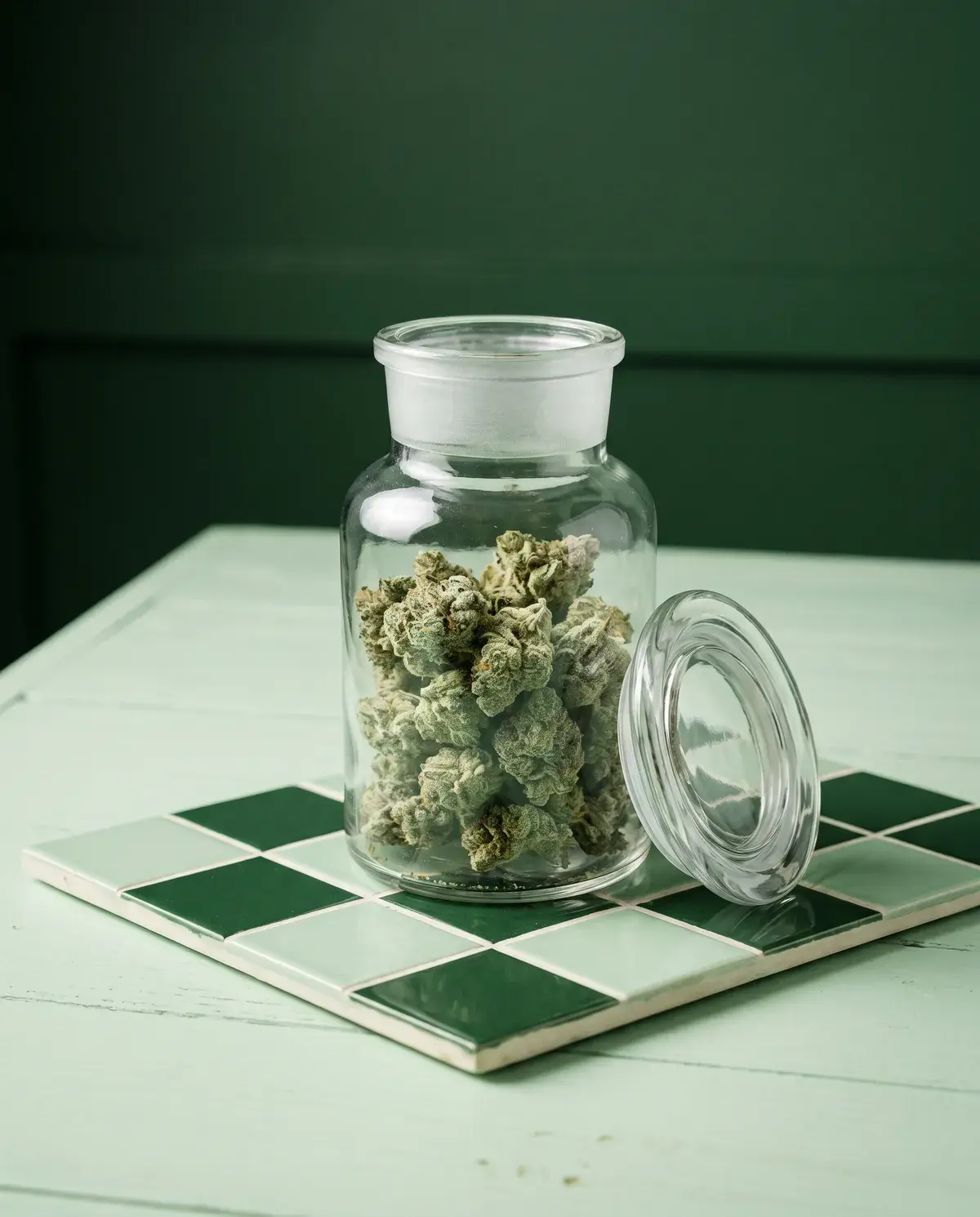


A flower list gets long fast, and the strain names and indica or sativa tags on it say less than they seem to. The values shown on the live menu say more. On October 7, 2026, every flower product returned by our Derby and Hartford live menus listed a THC value.
How to read a flower listing on the live menu
Start with the store. The product list on this page shows live items from the menu of the store you have selected, with a switch to the other store, so check which store is selected before you compare.
Next, read the terpenes. On that date, nearly every flower listing on both live menus also showed terpene values. THC is one measured compound, not a quality score, so read it next to the terpene values rather than on its own. Current offers, when there are any, sit on our deals page rather than here.
We prioritize products from licensed Connecticut cultivators and processors. To look up a grower you already know, start on our brands page, or go back to every aisle in the Hi! People shop. If this is your first trip, read our first-time guide to a Connecticut cannabis store, and before a Derby visit, see what to expect at the Bud Bar in Derby.
Eighths, quarters and halves in grams
Eighth, quarter and half are fractions of an ounce, and the state counts them in grams. Connecticut DCP states that any combination up to 14 total grams equals 1/2 ounce, and the smaller sizes follow from that figure:
- An eighth is 1/8 ounce, or 3.5 grams.
- A quarter is 1/4 ounce, or 7 grams.
- A half is 1/2 ounce, or 14 grams.
By the NIST conversion factor, a full ounce is a little over 28 grams. DCP also gives 14 pre-rolled cigarettes of 1 gram each as an example of 1/2 ounce, which helps if you shop our pre-roll aisle next to flower.
Our guide to eighth, quarter and half ounce weights has the longer version. If you buy a larger size, how to store cannabis at home is worth reading before it goes in a drawer.
Terpenes are what you smell in the jar
Published plant research describes terpenes as the primary constituents of essential oils and the compounds responsible for the aroma characteristics of cannabis. In female cannabis flowers, the trichome structures are where both the cannabinoids and the terpenes are located.
The terpene names on a listing point to smells you already know. Here is how PubChem's chemical records describe four of them:
- Limonene: a pleasant, lemon-like odor.
- Alpha-pinene: a characteristic odor of pine.
- Beta-caryophyllene: an odor midway between cloves and turpentine.
- Linalool: an odor similar to bergamot oil and French lavender.
The readout and the smell will not always match. A 2023 study in ACS Omega found terpene expression remained remarkably similar across varieties with divergent aromas. Our cannabis terpenes guide covers more compounds and where else they turn up.
Indica, sativa and hybrid are menu labels
A 2021 study in Nature Plants tested the indica and sativa labels against plant genetics and found that samples sold as Sativa and samples sold as Indica could not be told apart across the whole genome. What the labels did line up with was variation in a small number of terpenes.
The hybrid tag does not sort flower either. A 2022 study in PLOS ONE found THC-dominant samples labelled Indica, Hybrid and Sativa were highly intermingled, with no obvious segregation by label. Choose on the terpene values and on what you have liked before. Our indica vs sativa vs hybrid breakdown goes through the research, and you can read the paper itself in PubMed Central's copy of the Nature Plants study.
What Connecticut law caps on flower
The state's adult-use rules apply to people 21 and older, and a few of them set hard numbers for flower.
Potency comes first. Effective October 1, 2026, DCP lists adult-use flower potency at up to 35%, according to its potency thresholds page. Pre-rolls have a different cap: the same DCP page lists other adult-use cannabis products including edibles, pre-rolls and topicals at up to 70%, per DCP, which covers the infused pre-rolls aisle too.
The purchase limit is daily, not per order. The DCP notice on the per-transaction limit says a consumer may not buy more than one ounce per day per customer regardless of the number of transactions, so splitting an order does not raise it.
Possession has its own numbers, set in chapter 420b of the General Statutes. A person 21 or older may possess one and one-half ounces of cannabis plant material on their person. Locked storage has a higher number: a person 21 or older may keep five ounces of cannabis plant material in a locked container at their residence or in a locked glove box or trunk of their motor vehicle. For possession limits, one ounce of cannabis plant material equals five grams of concentrate or other cannabis products with up to five hundred milligrams of THC, which matters if you also shop our concentrates aisle.
Cannabis labels must carry a DCP-issued symbol that the package contains THC and a symbol that it is not safe or legal for people under twenty-one. How to read a Connecticut cannabis label shows what else is printed on the package, and our guide to Connecticut cannabis laws in 2026 collects the rest of the rules.
Questions shoppers ask about flower
Does the possession limit change for visitors from another state?
No. Visitors 21 and older have the same 1.5 oz possession limit as Connecticut residents, DCP says. Do not take flower across state lines when you leave. Our guide for out-of-state shoppers covers the rest of a visit.
Can a landlord stop me from keeping flower at home?
Generally not, if you are 21 or older. A landlord can ban smoking and vaping, but DCP says landlords generally may not prohibit possession or consumption of other forms of cannabis. So a lease can rule out lighting up in the unit without ruling out having flower there. Other questions are likely answered in the Hi! People FAQ.